

For many of our users here at TheSudoku.com, the morning grid is a daily ritual. It’s a way to wake up the mind alongside a cup of coffee. But have you ever wondered what is actually happening inside your brain while you are scanning for that elusive number 9 in the corner box?
Sudoku is often mistaken for a math game, but it is actually a pure test of logic and working memory. In recent years, neuroscientists and psychologists have increasingly studied how “brain games” influence our cognitive longevity.
In this article, we look beyond the grid to understand why solving Sudoku is not just a way to pass time – it is an investment in your cognitive reserve.
1. Neuroplasticity and “Cognitive Reserve”
The human brain has an incredible ability to reorganize itself by forming new neural connections throughout life. This is known as neuroplasticity. When you challenge your brain with a new, difficult Sudoku level, you are essentially engaging in a mental workout that stimulates these connections.
Researchers suggest that keeping the brain active may help build a “cognitive reserve”—a buffer that helps the brain cope with age-related changes.
According to Harvard Health Publishin (Harvard Medical School), engaging in mentally stimulating activities is a key pillar of maintaining brain health. They note that challenging your brain with puzzles can be just as important for your long-term health as physical exercise.
2. Training Your Working Memory
Sudoku is heavy lifting for your working memory.
Working memory is your ability to hold a small amount of information in your mind and manipulate it. When playing Sudoku, you aren’t just looking at numbers; you are:
- Remembering which numbers are already placed in a row.
- Holding potential “candidates” for a specific cell in your mind.
- Simultaneously scanning the vertical column and the 3×3 box.
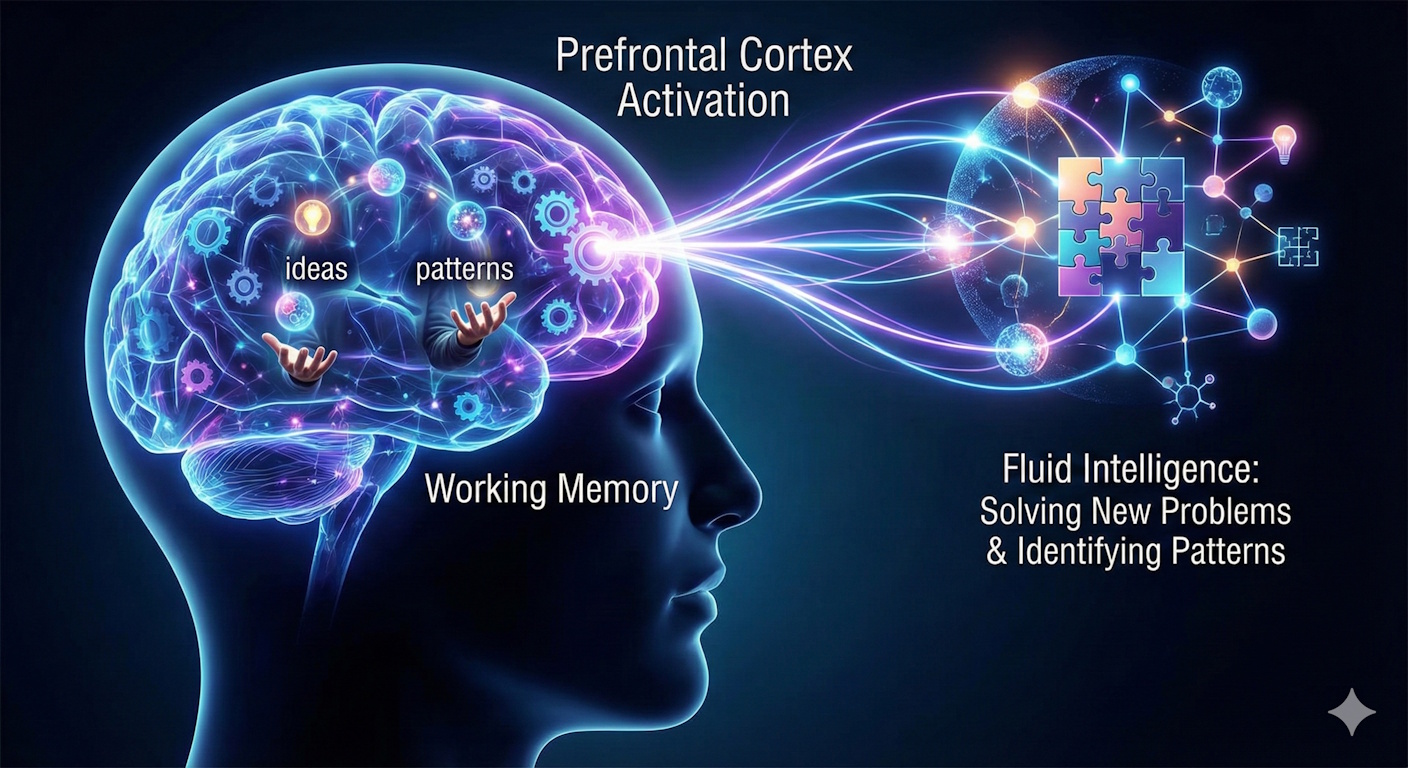
This mental juggling act activates the prefrontal cortex. Studies in cognitive psychology often link strong working memory to better “fluid intelligence”—the capacity to solve new problems and identify patterns.
3. The “Flow State” and Stress Reduction
It may seem paradoxical that a difficult puzzle can be relaxing, but Sudoku is a proven stress-reliever. This happens because the game requires total attention, pushing out intrusive thoughts and anxieties.
In psychology, this deep immersion is known as the “Flow State.”
The American Psychological Association (APA) describes flow as a state where a person is fully involved in an activity, leading to a sense of clarity. Unlike the chaotic nature of daily life, a Sudoku grid offers a structured environment where every problem has a definitive, logical solution. For many, this order brings a sense of calm and control.
4. Logic vs. Digital Distraction
In an era of endless scrolling and 15-second videos, our attention spans are under attack. Sudoku acts as an antidote to digital distraction.
A single game requires sustained focus. One hasty decision made in the first minute can break the puzzle twenty minutes later. This enforces a discipline of critical thinking and attention to detail—skills that transfer directly from the game into professional and daily life.
Conclusion
Solving a Sudoku puzzle won’t give you superpowers, and it isn’t a magic cure. However, when combined with a healthy lifestyle, it is a powerful tool for cognitive maintenance.
It keeps your working memory sharp, offers a healthy escape from stress, and reminds us that with enough logic and patience, even the most complex problems can be solved.
Leave a Reply