Halloween
Join the Halloween event and unlock exclusive rewards!


Easy Sudoku Online
Easy Sudoku Online
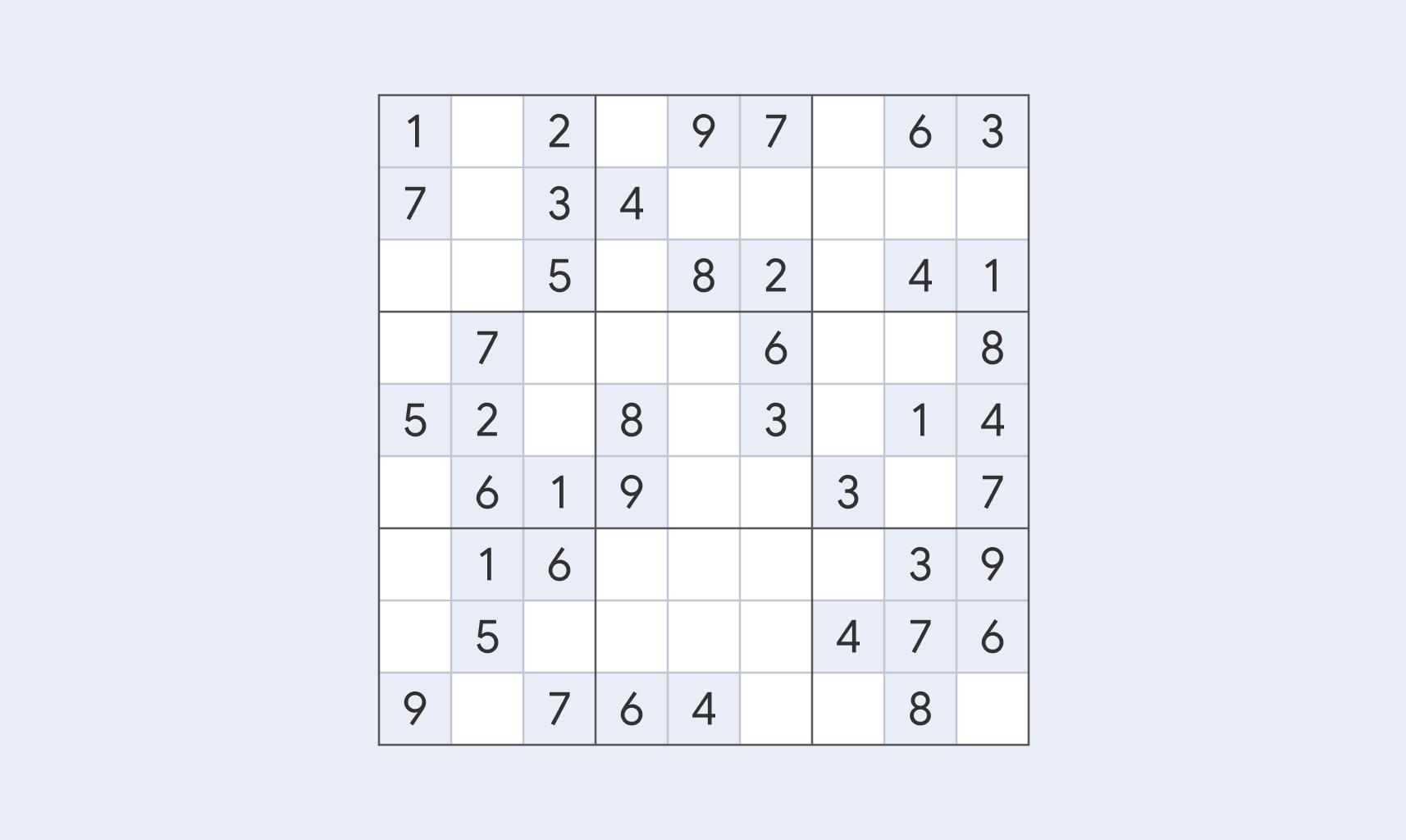
Easy Sudoku is suitable for beginners and for players who want a simple and comfortable puzzle. The rating comes from the logical steps needed to solve the grid. At this level, the next move is usually easier to spot, so new players can see how the rules work in practice.
This difficulty is recommended for people who are learning Sudoku for the first time. It helps you get used to the basic rules and build confidence without too much pressure. Easy Sudoku is also a good choice for short daily practice, relaxed evening play, or a quick puzzle during a break.
Many players start with easy Sudoku because it gives steady progress from the beginning. You do not need to know advanced methods, and in most cases the puzzle can be solved by scanning the grid carefully and checking each move step by step. Basic beginner techniques are usually enough at this level.
Who is Easy Sudoku for?
Easy Sudoku is made for players who want to learn the game in a clear and simple way. You can start solving easy puzzles as soon as you know the basic rule: each row, column, and 3x3 box must contain the numbers from 1 to 9 without repetition.
It is especially suitable for players who have never played Sudoku before, want a light and relaxing puzzle, prefer shorter and more comfortable games, or are building confidence before moving to normal Sudoku.
This level is also useful for developing good habits from the beginning. When players start with easy Sudoku, they learn to scan the board properly, notice missing numbers, and avoid random guessing.
How to play Easy Sudoku
The goal of Sudoku is always the same: fill the empty cells with numbers from 1 to 9 so that each number appears only once in every row, every column, and every 3x3 box.
On Easy, useful placements are usually available through direct scanning. You can often find the next number without using advanced techniques.
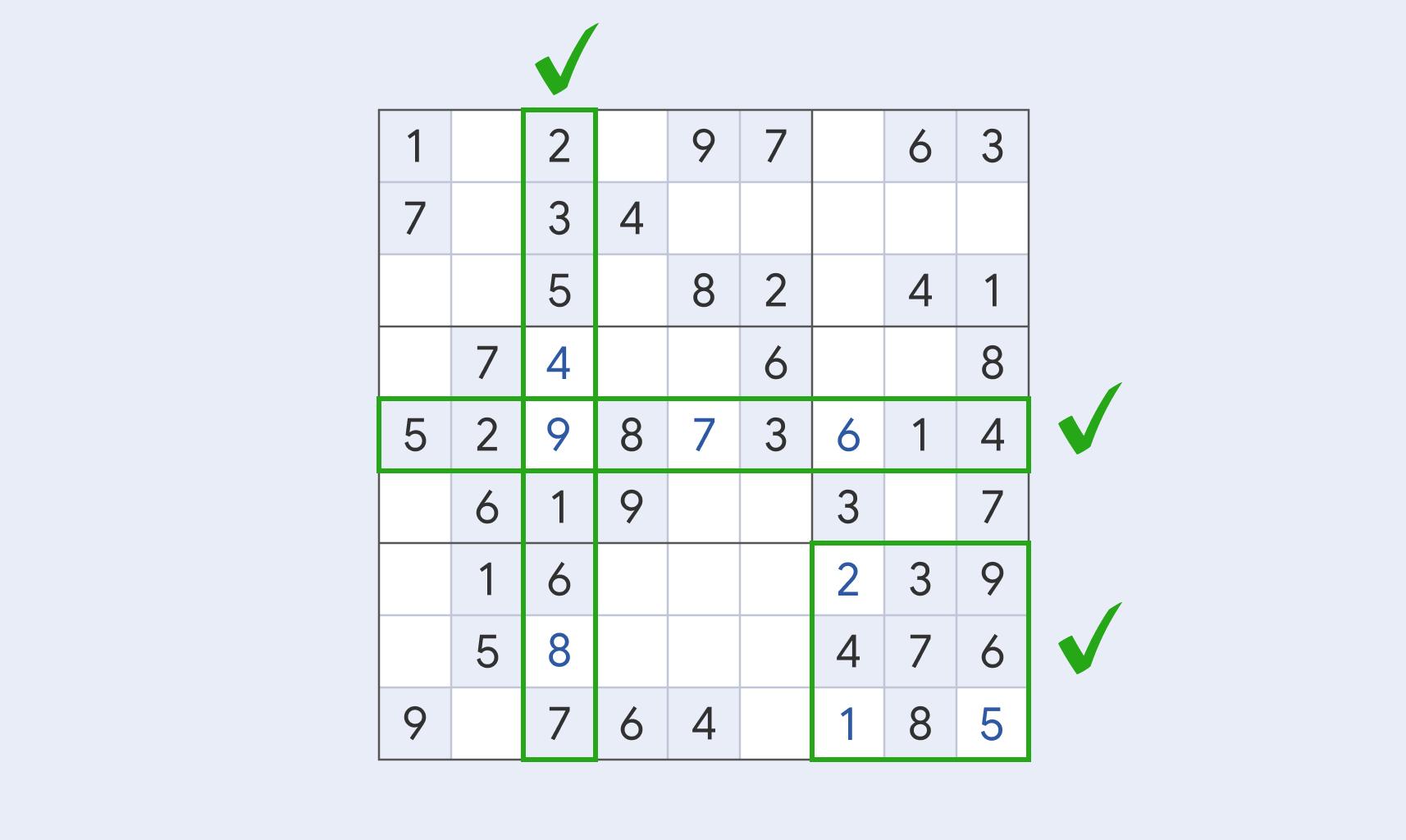
A good way to begin is to look at the rows, columns, and boxes that already have many numbers in them. These areas usually give the easiest moves. After that, it is useful to check one number at a time across the whole grid and see where it can still go.
Tips for solving Easy Sudoku
Easy Sudoku is simple, but it is still better to play with a method. A clear approach helps you solve faster and make fewer mistakes. Start with the most filled rows, columns, or boxes. Look for empty cells where only one number can fit. Scan the grid digit by digit if you are not sure where to move next. Check every move against the row, column, and box before placing a number. Do not guess. Easy puzzles are designed to be solved with straightforward logic.
Another useful habit is to move slowly and keep the board clean. Beginners often make mistakes because they rush through obvious-looking cells without checking the full grid. It is usually better to solve carefully than quickly.
Techniques that help on Easy Sudoku
Easy Sudoku can be solved using only the most basic techniques: Last Free Cell, Last Remaining Number, Last Possible Cell, Naked Single, and Hidden Single. These methods are based on observation and checking what is already on the board, so they do not require advanced knowledge.
If you are new to these techniques, open one of the guides and try the method on the puzzle in front of you. Understanding these moves will make Easy puzzles clearer and give you a useful foundation for harder levels.
Why play Easy Sudoku?
Easy Sudoku is popular because it gives a pleasant puzzle experience without too much difficulty. It is a simple way to relax, stay focused, and enjoy a game that feels clear and rewarding from the first few moves.
This level is also useful for regular practice. When you play easy Sudoku often, you get faster at spotting patterns, checking possibilities, and understanding how the grid is structured. That makes it easier to move on to more difficult puzzles later.
For many players, easy Sudoku is not only a starting point, but also a favorite daily format. It offers a good balance of logic, comfort, and steady progress.
Frequently Asked Questions