Thanksgiving Day
Join the Thanksgiving Day event and unlock exclusive rewards!
Explore the five Master Sudoku levels
Choose a rating band for your next game. Each level opens its own playable Sudoku page.
The bands use Sudoku Explainer ratings. They describe difficulty, not a time limit or a required list of techniques.


Master Sudoku Online
Free Master Sudoku with five rated sub-levels
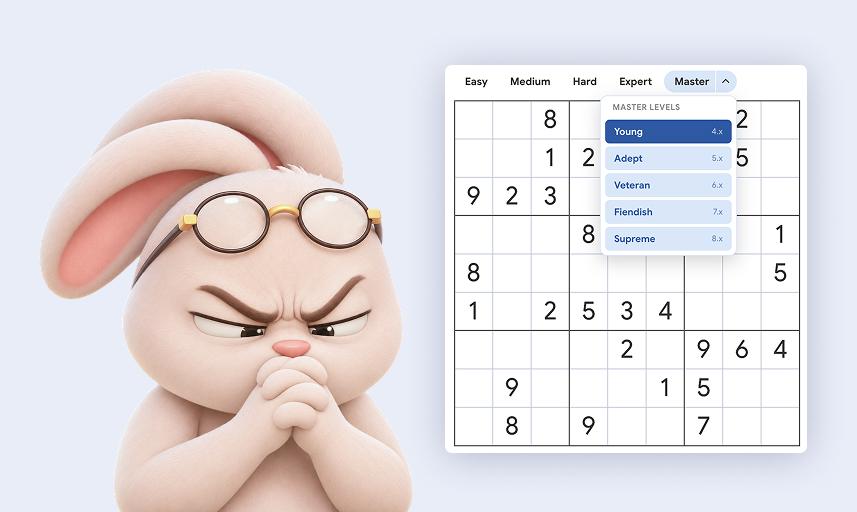
Master Sudoku is the most demanding main difficulty on TheSudoku.com. Instead of relying on one broad label, choose a sub-level in the Master menu: Young, Adept, Veteran, Fiendish or Supreme. Play free online with candidate notes and guided hints available.
The sub-levels use Sudoku Explainer (SE) rating bands. SE describes the difficulty of the hardest step in a solver's logical solution path; it is not a completion-time target. Familiarity with the required pattern still makes a large difference to how hard a grid feels.
Choose a Master difficulty
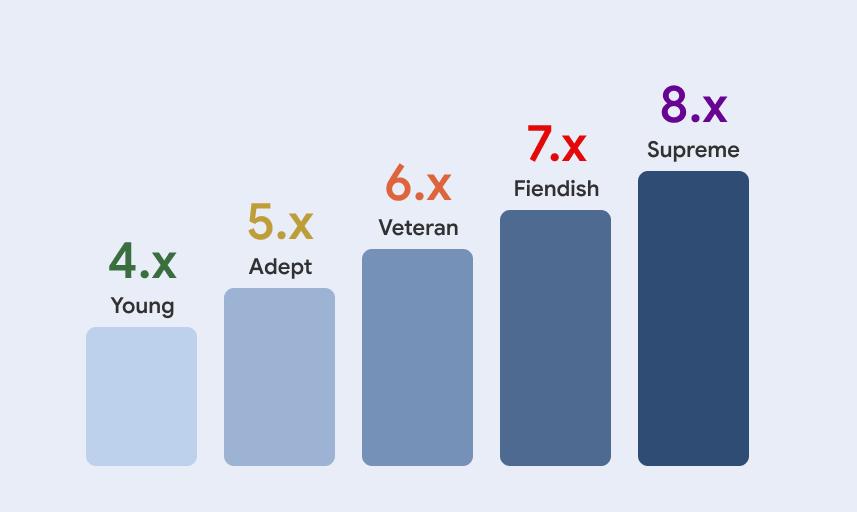
Young — SE 4.x. Start here when moving up from Expert. Use this band to explore advanced patterns before trying higher ratings.
Adept — SE 5.x. Move up when you want to practice deductions from the next rating band.
Veteran — SE 6.x. Choose a higher-rated logical challenge while continuing to check simple moves first.
Fiendish — SE 7.x. Expect to work with more demanding reasoning, including chain-based methods.
Supreme — SE 8.x. This is the highest of the five selectable Master bands. Allow time to follow and verify advanced deductions.
Open the arrow beside Master to choose a named sub-level. The bands are separate: Young means a rating from 4.0 up to, but not including, 5.0; the same interval pattern applies to the other bands. Browse SE-rated Sudoku puzzles for the wider collection.
How to approach a Master grid
Start with accurate candidates and check Singles, subsets and locked candidates before moving to advanced patterns. After every elimination, scan for new placements. A higher rating does not make a simple deduction any less useful.
Keep each inference traceable. In a chain, identify what makes one candidate force or exclude another. If a link is not justified, stop and check it rather than carrying the uncertainty through the rest of the grid. A short verified deduction is more useful than a long unsupported one.
Learn advanced techniques with a clear purpose
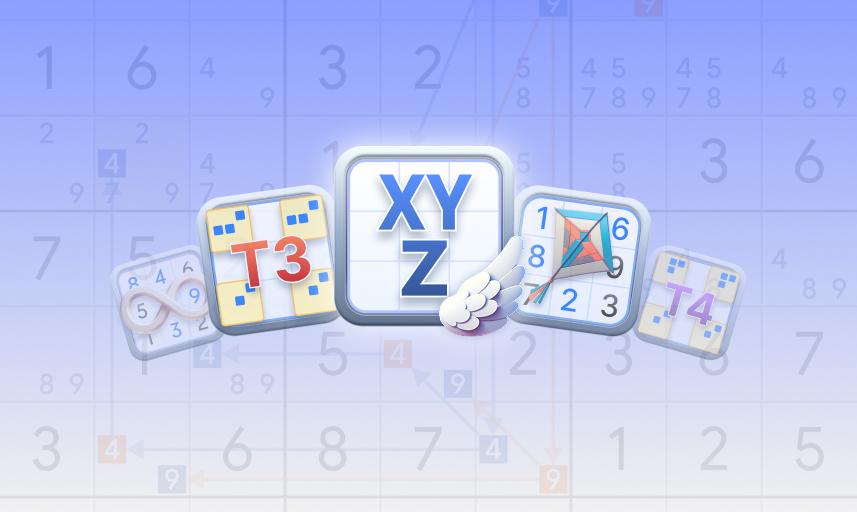
The method you need depends on the band and the individual puzzle. XY-Wing, Two-String Kite and X-Loop are useful topics to study; higher bands can involve Forcing Chains and more demanding conditional reasoning.
A Unique Rectangle uses an additional assumption: the puzzle has a unique solution. Understand that premise before applying the technique. No single list of named methods is a requirement for every Master grid.
Use hints to check the reasoning
When you cannot continue, verify your entries and notes before searching for a longer chain. Open the hint control and read the highlighted deduction step by step. If the method is new, study its guide and return to the puzzle to identify the same relationships.
In conditional reasoning, “if this candidate were true” begins an argument; it is not a confirmed placement. A contradiction can show that the assumption was false. The explanation of logical deduction versus guessing describes this distinction.
Choose a challenge you can learn from
Return to a lower Master band when you want more practice with its patterns. If candidate eliminations themselves are still unfamiliar, Expert Sudoku is a useful place to build confidence before continuing.
Use your Master Sudoku statistics as a broad record of your games, and consider the selected SE band when comparing difficulty. A result at Young and one at Supreme represent different challenges, even though both belong to Master.
Master Sudoku FAQ