Sudoku Rules

3D Medusa
Advanced multi-digit coloring across interconnected candidates

Forcing Chains
Following logical consequences from an assumed candidate
Nishio
Trial a candidate and eliminate it if it leads to a contradiction
Dynamic Forcing Chains
Forcing chains that branch through multiple logical possibilities
5 Ultimate Chaining & Coloring Techniques
1. 3D Medusa (Multi-Digit Coloring)
3D Medusa extends basic 2-color Simple Coloring by tracking candidates across both bi-location links (a candidate appearing twice in a row, column, or block) and bi-value cells (a cell containing exactly two candidates).
By alternating two colors (e.g., Green = True, Blue = False) through strong links across different digits, you build a multi-digit web. Elimination occurs when logic breaks:
- Twice in a Unit: If two candidates of the same color share a unit, that entire color set is false.
- Two Colors in a Cell: If a single cell contains both colors, the blue/green assignment for that cell forces an instant collapse.
- Emptied Cell: If all candidates in a cell share the same color, that color must be false (otherwise the cell is left empty).
2. Dual Medusa
Dual Medusa applies when a grid contains two completely separate 3D Medusa coloring webs that do not directly intersect through strong links. Instead of analyzing them in isolation, you look at how the two independent webs interact within shared units. If a candidate outside both chains sees a specific color state from Web A and a specific color state from Web B—and both states force the elimination of that candidate—it can be safely erased.
3. Nishio (Nishio Forcing Chains)
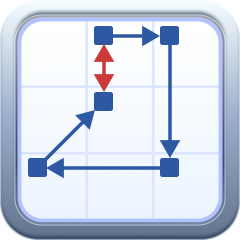
Nishio is a targeted proof-by-contradiction technique focused on a single candidate placement. You select a cell with a candidate, assume it is TRUE, and follow the immediate chain reaction of strong and weak links. If this initial placement forces an illegal grid state (such as leaving a row, column, or block without any valid placement for that digit), your initial assumption was false. You can immediately erase that candidate from the starting cell.
4. Forcing Chains
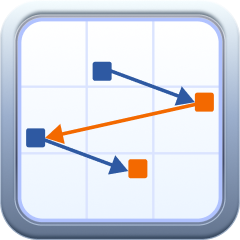
Forcing Chains explore all possible choices for a specific starting condition (such as every candidate in a tri-value cell, or every location for a digit in a row) to see if they all lead to the exact same outcome.
- Cell Forcing Chains: If a cell has candidates
[1, 4, 7], you build three separate chains assumingCell=1,Cell=4, andCell=7. If all three independent paths force cellX9to be5, thenX9=5is mathematically guaranteed. - Region Forcing Chains: If candidate
3can only go in three spots in Row 1, you trace chains from all three spots. Any candidate eliminated by all branch paths can be permanently deleted.
5. Dynamic Forcing Chains
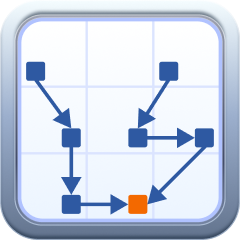
The absolute ceiling of Sudoku logic. Dynamic Forcing Chains allow chains to split, nest inside other chains, and dynamically update the rules of the grid as hypothetical placements are made. Unlike static forcing chains—which follow simple alternating logic—dynamic chains can discover complex internal sub-contradictions within individual branches. If a sub-branch creates a mini-loop or triggers a sub-forcing chain, the master chain incorporates that logical deduction to clear candidates across the grid.
Master the Ultimate Chain Logic
Mastering loops, coloring webs, and forcing chains transforms extreme-level Sudoku from overwhelming candidate clutter into structured logical paths. Systematically label your strong links, alternate your colors, and test branch implications to dismantle the toughest puzzles available.
Ready to test your chaining skills? Dive into our Master Sudoku Puzzles now to apply 3D Medusa, Nishio, and Forcing Chains in real time!