Sudoku Rules
Unique Rectangle Type 1
Find the basic deadly pattern and take advantage of it
Unique Rectangle Type 2
Adds an extra candidate in two cells
Unique Rectangle Type 3
Unique Rectangle combined with a Naked or Hidden Pair
Unique Rectangle Type 4
Unique Rectangle considering the unique candidates within the unit

Bi-value Universal Grave
If all remaining cells have only two candidates, this Sudoku is fatally flawed
Master Sudoku Rules & Ultimate Solving Techniques
When you reach the pinnacle of Sudoku difficulty, traditional geometric patterns and basic chains give way to global grid analysis and unresolvable symmetry traps. Master-level solving requires exploiting the fundamental law of Sudoku: a valid puzzle must have one, and only one, unique solution.
By mastering continuous single-digit loops and the family of Unique Rectangles, you can clear dense candidate webs and solve the most formidable puzzles without ever taking a guess.
6 Essential Master-Level Techniques
Master-level strategies rely on tracking dynamic logical loops and protecting the grid against “Deadly Patterns”—configurations that would render a puzzle invalid by creating multiple solutions.
1. X-Cycle (Continuous Loop)
An X-Cycle is an advanced single-digit chaining technique that connects a single candidate through a continuous, closed ring of alternating strong links (where a candidate appears exactly twice in a unit) and weak links. Because the loop is continuous and self-reinforcing, every weak link within the loop acts like a strong link. This allows you to safely eliminate that candidate from any cell outside the loop that shares a unit with a weak link.
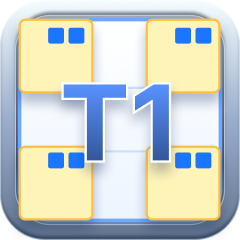
2. Unique Rectangle Type 1
Unique Rectangle (UR) Type 1 protects the puzzle from falling into a “Deadly Pattern”—a 4-corner rectangle spanning two 3×3 blocks where all corners contain the exact same two candidates ([X, Y]). In Type 1, three corners contain strictly [X, Y], while the fourth corner holds [X, Y] plus extra candidates. To preserve a single unique solution, the extra candidates in the fourth cell must be true, allowing you to instantly erase X and Y from that cell’s pencil notes.
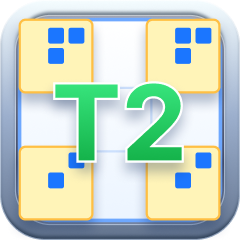
3. Unique Rectangle Type 2
In Unique Rectangle Type 2, two corners of the rectangle contain the base pair [X, Y], while the other two corners contain [X, Y] plus the same single extra candidate (e.g., both hold [X, Y, Z]). Because candidate Z is mathematically forced into one of those two modified corners to prevent a Deadly Pattern, candidate Z forms a strong pair. You can safely eliminate Z from any external cell that sees both of those modified corners simultaneously.
4. Unique Rectangle Type 3
Unique Rectangle Type 3 combines uniqueness logic with traditional subset techniques (Naked Pairs, Triples, or Quads). When two corners of the rectangle contain extra candidates, those non-base candidates join forces with other empty cells along a shared row, column, or block. This forms a Naked Subset, allowing you to clear those subset numbers from every other cell in that shared unit.
5. Unique Rectangle Type 4
Instead of focusing on extra candidates, Unique Rectangle Type 4 inspects the strong links of the base digits across a shared unit. If one of the base candidates is locked into the rectangle’s corners within that unit and cannot appear anywhere else, it must land there. To prevent the two corners from collapsing into the Deadly Pattern, you must eliminate the other base candidate from those modified corner cells.
6. Bi-value Universal Grave (BUG+1)
A Bi-value Universal Grave is a global grid trap where every unsolved cell contains exactly two candidates, creating an invalid puzzle with multiple solutions. In real play, you will encounter BUG+1, where every empty cell except one has two candidates, and one single “savior cell” has three. To prevent the entire grid from collapsing into a Deadly Pattern, the savior cell must take the candidate that appears three times in its row, column, and block, instantly resolving that cell and completing the grid.
Master the Art of Uniqueness and Loops
Reaching the Master tier transforms Sudoku from a game of local elimination into a study of global grid harmony. By recognizing continuous loops and capitalizing on uniqueness rules, you can collapse complex candidate blocks in a single logical stroke.
Ready to prove your ultimate logic? Tackle our Master Sudoku Puzzles now to apply X-Cycles, Unique Rectangles, and BUG+1 in real time